
Pay As You Go Car Insurance in Georgia
Between Atlanta traffic and premiums that have climbed sharply in recent years, many drivers are searching for pay as you go car insurance in Georgia to pay only for the driving they actually do. Georgia has real options: an Atlanta-based pay-per-mile insurer, Nationwide's SmartMiles, a military-only mileage program, and a pay-by-the-day company. But Georgians also drive far more than most Americans, so pay-per-mile only pays off for the right driver.
This guide explains how each option charges, what Georgia drivers pay, where pay-per-mile stops saving money, and how Georgia's strict lapse rules can turn "turn it off" coverage into a fee. It also covers driving-behavior discounts from the big insurers, the pros and cons, and a step-by-step plan for choosing the right policy.
KEY TAKEAWAYS
- Mile Auto, Nationwide SmartMiles, and USAA SafePilot Miles sell pay-per-mile coverage in Georgia; Allstate Milewise, Lemonade, and Metromile do not.
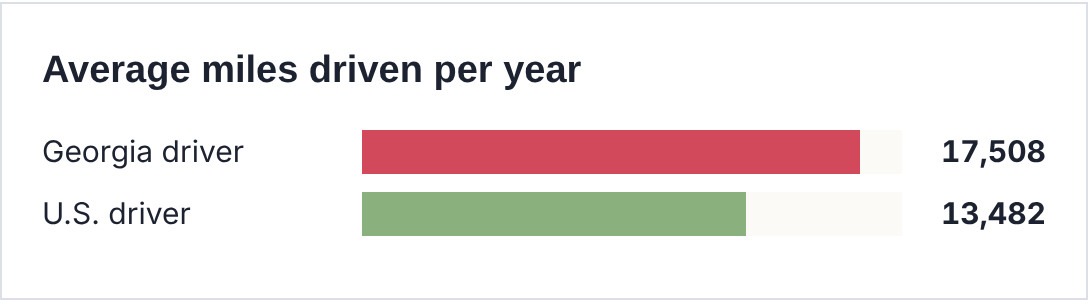
- Georgia drivers average 17,508 miles a year, well above the 13,482 national average, so pay-per-mile mainly helps low-mileage drivers.
- Georgia flags a lapse after 10 or more days without coverage on a registered car, so pausing a policy can trigger a $25 fee and a suspended registration.
What "pay as you go" car insurance means in Georgia
The phrase covers three different products. Only two of them change your cost based on how much you drive, and one of them comes with a Georgia-specific risk.
Three types of pay as you go car insurance in Georgia
Type | How you pay | Georgia examples | Watch out for |
|---|---|---|---|
Pay-per-mile | Monthly base rate plus a charge for each mile | Mile Auto, Nationwide SmartMiles, USAA SafePilot Miles | Costs more if you drive a lot |
Pay-per-day | A daily rate, paid daily, weekly, or monthly | Hugo | Turning coverage off can create a lapse |
Monthly or low down payment | A regular policy with a small first payment | Many standard insurers | The total premium may not drop |
Company sites and 2026 reviews (accessed October 29, 2026). Availability can change; confirm with a quote.
A fourth idea often gets mixed in: driving-behavior programs, also called telematics or usage-based insurance. These track how you drive, not just how much, and give discounts for safe habits. Georgia allows them, and they are covered later in this guide.
How pay-per-mile insurance charges you
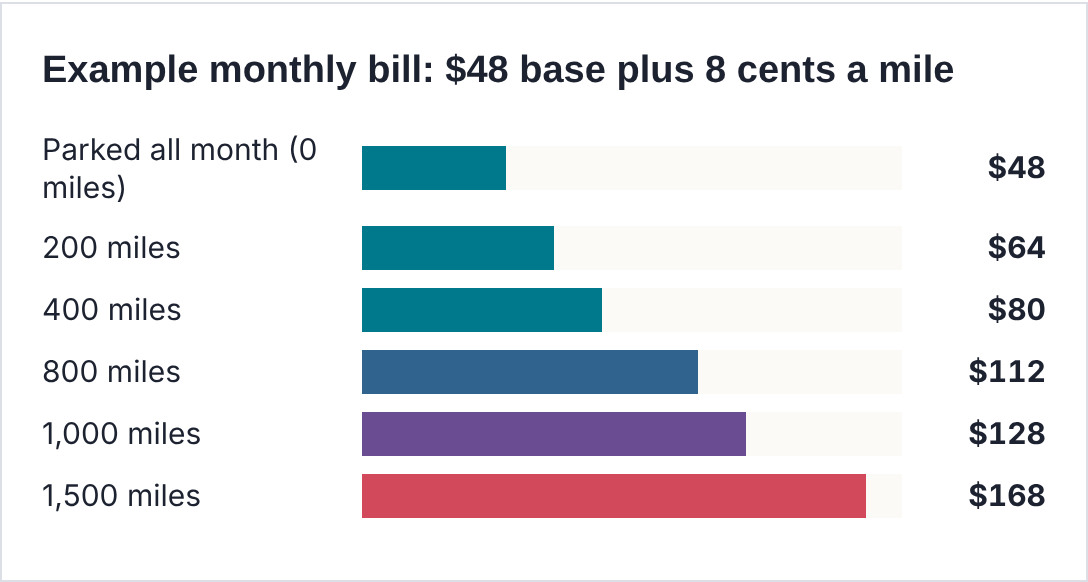
Pay-per-mile policies use one formula. You pay a fixed monthly base rate that covers your car while it is parked and reflects your age, record, car, credit, and ZIP code. Then you pay a few cents for every mile you drive. Your monthly bill rises and falls with your miles.
Different programs count miles differently. Mile Auto asks for a photo of your odometer each month and uses no device or app. Nationwide SmartMiles uses a plug-in device or a connected car, and it counts only the first 250 miles you drive in a day, which keeps a trip to Savannah or the Gulf Coast from blowing up your bill. USAA SafePilot Miles uses its phone app.
Pay-per-mile and pay-as-you-go companies in Georgia
Many ranking pages get Georgia wrong. Some still list Metromile, which never sold in Georgia, or Allstate Milewise, which is not offered here. This table reflects official company pages and 2026 reviews as of October 29, 2026.
Pay-as-you-go options for Georgia drivers, October 2026
Program | Georgia status | How it charges | Tracking |
|---|---|---|---|
Mile Auto | Available; based in Atlanta | Monthly base plus per-mile rate | Monthly odometer photo |
Nationwide SmartMiles | Available | Base plus per-mile; first 250 miles a day counted; up to 10% safe-driving discount | Plug-in device or connected car |
USAA SafePilot Miles* | Available to military families | Fixed rate plus monthly mileage adjustment; up to 20% for low miles | USAA DriveSafe app |
Hugo | Likely available; sources conflict | Daily rate, paid daily, weekly, monthly, or on payday | No mileage tracking |
Allstate Milewise | Not available | Daily base plus per-mile rate | Not applicable |
Lemonade Car | Not available | Base plus per-mile in some states | Not applicable |
Metromile | Never sold in Georgia | Brand merged into Lemonade | Not applicable |
Noblr | No longer sells insurance | Discontinued after USAA purchase | Not applicable |
Nationwide SmartMiles pages; USAA SafePilot Miles page; Lemonade availability page; 2026 rate studies and reviews (accessed October 29, 2026). *USAA is available only to military members, veterans, and their families.
Mile Auto: the Atlanta pay-per-mile option
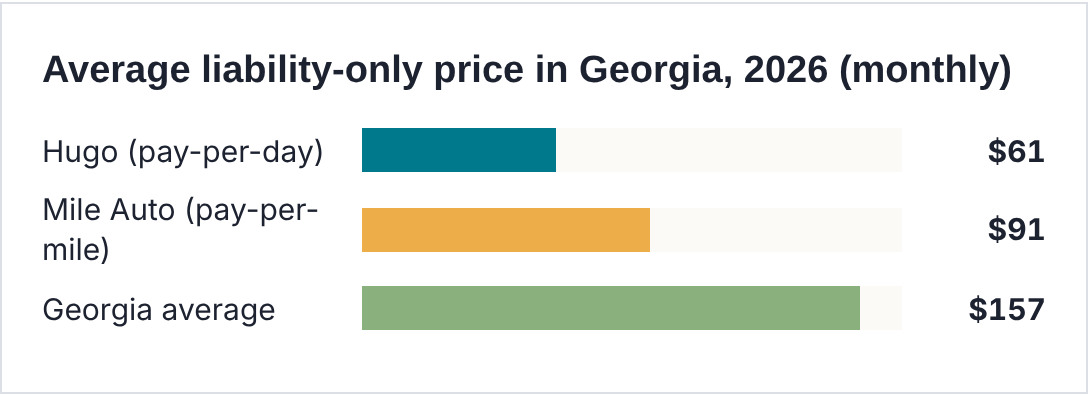
Mile Auto, headquartered in Atlanta, is the most direct pay-per-mile choice for many Georgians. You pay a monthly base rate plus a per-mile rate, and you report miles by sending an odometer photo each month, which its system verifies. A 2026 rate study put its typical rates at about $48 a month plus 8 cents a mile, and its average liability-only price in Georgia at $91 a month, against a $157 state average.
Read the fine print. A 2024 firsthand review by consumer advocate Clark Howard reported about $13 a month in fees, and said that if you miss the window to send your photo, Mile Auto bills you as if you drove 75 miles a day. Mile Auto is also not rated by AM Best, so drivers who care about financial strength ratings should weigh that.
What a month on Mile Auto looks like
Mile Auto's process is simple but strict. Each month, it asks you to photograph your odometer and send the picture in. Its system checks the reading, and your bill becomes the base rate plus your miles times the per-mile rate.
The 2024 firsthand review in the Atlanta Journal-Constitution described a three-day window to send the photo; miss it, and the bill assumes 75 miles a day, about 2,250 miles in a 30-day month. At 8 cents a mile, that assumption alone would add about $180 to a bill (our calculation). Set a phone reminder for the day your request arrives.
Pay-per-day vs. pay-per-mile
Pay-per-day vs. pay-per-mile in Georgia
Feature | Pay-per-day (Hugo) | Pay-per-mile (Mile Auto, SmartMiles) |
|---|---|---|
What you pay for | Each day of coverage | A base rate plus each mile |
Down payment | None | Varies by insurer |
Best for | Tight or irregular budgets | Low, steady mileage |
Lapse risk in Georgia | Higher if you pause coverage | Low; coverage stays active |
Mileage tracking | None | Odometer photo, device, or connected car |
Atlanta vs. the rest of Georgia
Where you live changes the math. Atlanta drivers pay more for full coverage, $270 a month on average in Study A, and lose hours to congestion, which can make a short in-town commute a good fit for pay-per-mile, especially for drivers who use MARTA for some trips. Drivers in rural Georgia often face long distances to work, school, and stores, so their mileage climbs quickly and a standard policy or a safe-driving discount usually fits better.
Nationwide SmartMiles
SmartMiles is available in Georgia, since Nationwide excludes only Alaska, Hawaii, Louisiana, Michigan, North Carolina, New York, and Oklahoma. Your bill is a base premium plus a per-mile rate times the miles from the previous month, and both rates stay fixed for the policy term. Only the first 250 miles in a day count. Unlike in California, Georgia drivers can earn a safe-driving discount of up to 10%, first applied at renewal.
Nationwide does not publish Georgia rates. A 2026 study put SmartMiles per-mile charges at about 5 to 12 cents, and Nationwide reported that its average SmartMiles driver, outside California, saved 33% between March 2023 and April 2024.
USAA SafePilot Miles
Military members, veterans, and their families can choose USAA's SafePilot Miles, which is available in Georgia. It combines a fixed rate with a monthly adjustment based on last month's miles, and USAA says drivers can save up to 20% for driving less, plus up to another 20% at renewal for safe driving. Everyone on the policy must use the USAA DriveSafe app.
Hugo: pay by the day
Hugo is not pay-per-mile. It charges a flat daily rate, and you can pay daily, weekly, monthly, or on your payday, with plans of 3, 7, 14, or 30 days or six months and no down payment.
Its basic plan is liability only, and a full plan covers your car. A 2026 rate study listed Georgia among Hugo's states and put its average Georgia liability price at $61 a month, but sources disagree on its state list, so confirm with a quote. In June 2026, Root announced a partnership to offer Root full coverage to Hugo customers.
Georgia car insurance requirements
Georgia rules every pay-as-you-go driver should know
Rule | Details |
|---|---|
Minimum liability | 25/50/25: $25,000 per person, $50,000 per accident, $25,000 property damage |
Uninsured motorist coverage | Must be offered; you must reject it in writing |
Proof of insurance | Insurance card in the car; declaration pages not accepted |
Electronic reporting | Insurers report coverage to the state within 30 days |
Lapse | 10 or more days with no coverage on record |
Credit-based insurance scores | Allowed, with limits; cannot be the sole reason to deny or cancel |
Georgia Office of Insurance and Safety Fire Commissioner; Georgia Department of Revenue; O.C.G.A. sections 33-7-11 and 33-24-91 (accessed October 29, 2026).
Uninsured motorist coverage deserves a close look in Georgia. About 19% of Georgia drivers were uninsured in 2023, the 11th highest rate in the country, according to the Insurance Research Council. Whatever pay-as-you-go option you choose, keeping uninsured motorist coverage protects you from the many drivers who have none.
Georgia's lapse rule: the hidden risk of "turning off" insurance
This is the most important Georgia detail, and no top-ranking page explains it. Georgia uses an electronic system, the Georgia Electronic Insurance Compliance System, to match every registered car with an active policy. Insurers must report coverage within 30 days. If a registered car has 10 or more days with no coverage on record, the Georgia Department of Revenue treats it as a lapse.
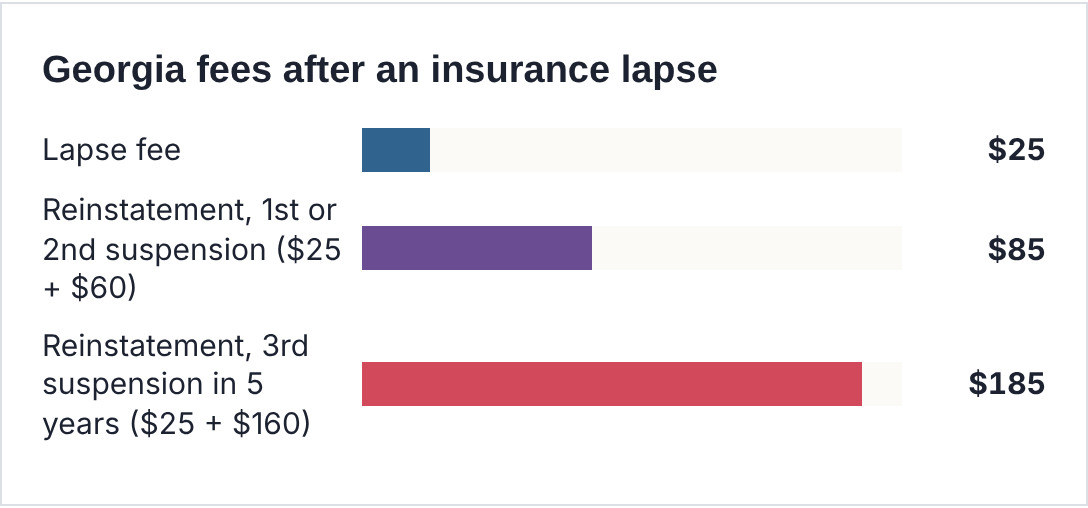
If you do not pay the $25 lapse fee within 30 days, your registration is suspended. Getting it back costs $25 plus $60 for a first or second suspension, or $25 plus $160 for three or more suspensions in five years. Driving without insurance is a misdemeanor with a fine of $200 to $1,000 and up to 12 months in jail. That matters for pay-as-you-go. If you pause a pay-per-day policy for weeks while your car stays registered, Georgia may see a gap. Before you turn coverage off, ask the insurer how paused days are reported. If a car will sit for months, the safer route is to cancel its registration with the Department of Revenue, using Form MV-18J, before ending coverage.
PRO TIP #1
Never let a registered car go 10 or more days without coverage on record. If you are switching insurers, start the new policy on the same day the old one ends, and keep your new insurance card in the car, since Georgia does not accept declaration pages as proof.
How much can you save with pay-per-mile in Georgia?
Georgians drive a lot. Georgia drivers average 17,508 miles a year, compared with 13,482 nationally, according to 2022 Federal Highway Administration data. Atlanta drivers also lost about 75 hours to congestion in 2025, the 7th most in the country, according to INRIX. That means pay-per-mile helps a smaller share of Georgians than in many states, but it can help a lot if you are one of them.
To show the math, we used the Mile Auto example rates of $48 a month plus 8 cents a mile and compared them with Georgia's average liability-only premium of $1,881 a year from Study A, a real-quote analysis updated October 28, 2026. This is a hypothetical example, not a quote; your base rate will reflect your own profile.
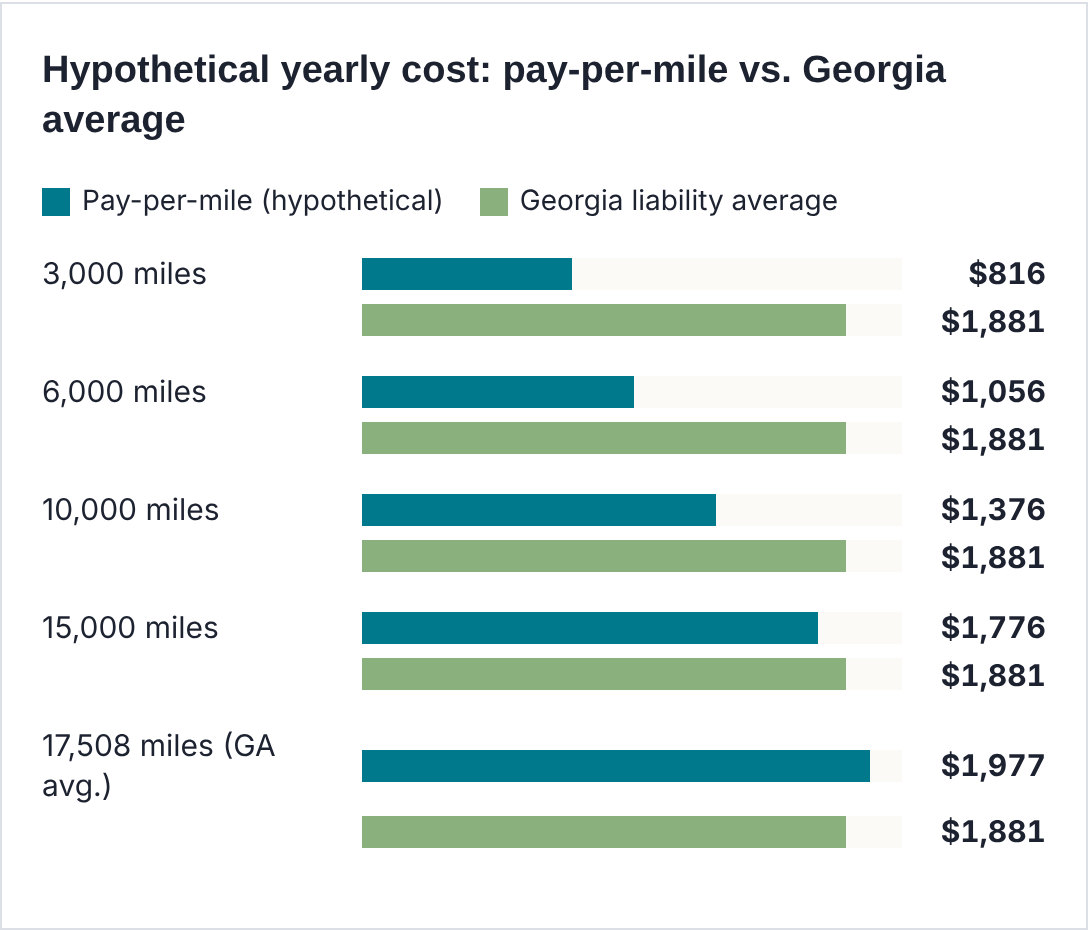
In this example, pay-per-mile saves money up to about 16,300 miles a year, because Georgia's average premium is high. At 3,000 miles, the savings would be about $1,065 a year. At Georgia's average of 17,508 miles, pay-per-mile would cost about $96 more. Monthly fees, like the roughly $13 a month reported for Mile Auto in 2024, would lower the break-even point.
Hypothetical savings by yearly mileage (our calculation)
Miles a year | Pay-per-mile cost | vs. $1,881 average |
|---|---|---|
3,000 | $816 | Save $1,065 |
6,000 | $1,056 | Save $825 |
10,000 | $1,376 | Save $505 |
15,000 | $1,776 | Save $105 |
17,508 | $1,977 | Pay $96 more |
20,000 | $2,176 | Pay $295 more |
Hypothetical; our calculation using $48 a month plus 8 cents a mile. Excludes fees. Your base rate depends on your record, credit, car, and ZIP code.
Four Georgia drivers, four results
Hypothetical Georgia drivers (our calculation)
Driver | Miles a year | Pay-per-mile cost | Result vs. $1,881 |
|---|---|---|---|
Retiree in Savannah | 4,000 | $896 | Saves $985 |
Remote worker in Decatur who rides MARTA | 6,500 | $1,096 | Saves $785 |
UGA student in Athens | 5,000 | $976 | Saves $905 |
Commuter from Gwinnett to downtown Atlanta | 22,000 | $2,336 | Pays $455 more |
Hypothetical; our calculation using the same example rates. A student's base rate would usually be much higher than this example. Not a quote.
What Georgia car insurance costs without pay-as-you-go
Any pay-as-you-go quote should be compared with a standard policy. Study A put Georgia's average at $157 a month for liability-only coverage and $259 a month for full coverage, with Atlanta at $270 a month. It reported that full coverage costs rose 26% in 2024 and 5% in 2025. Study B, an October 2026 analysis, put full coverage at $263 a month and found much lower prices from the cheapest insurers.
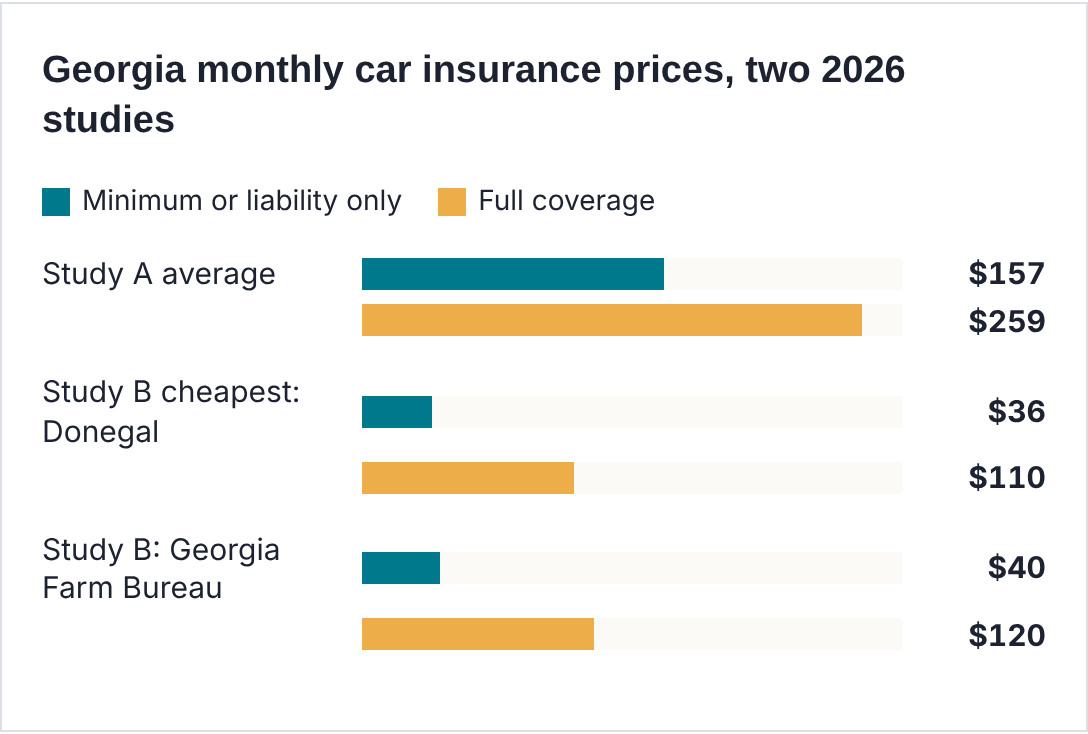
Study B's cheapest prices show why shopping matters as much as pay-as-you-go. A clean-record driver who qualifies for Donegal or Georgia Farm Bureau might pay less on a standard policy than on any pay-per-mile plan, even with moderate mileage.
When a standard policy is the better deal
Pay-per-mile is not automatically the cheapest option. If you drive 15,000 miles or more a year, have a clean record, and qualify for the lowest-priced insurers, a standard policy may cost less, especially from the insurers Study B found cheapest in Georgia. A standard policy also gives you a predictable bill, which some households value more than possible savings.
The market is also changing. Noblr stopped selling insurance after USAA bought it, Lemonade has not expanded car insurance into Georgia, and Root announced a partnership with Hugo in June 2026. Check availability again each time you renew, because new pay-per-mile options may arrive.
Driving-behavior discounts in Georgia
Georgia, unlike California, allows insurers to price on how you drive. If you drive a lot but drive carefully, a behavior-based telematics program may save more than pay-per-mile. These programs track habits such as hard braking, speeding, phone use, and late-night driving through an app or device.
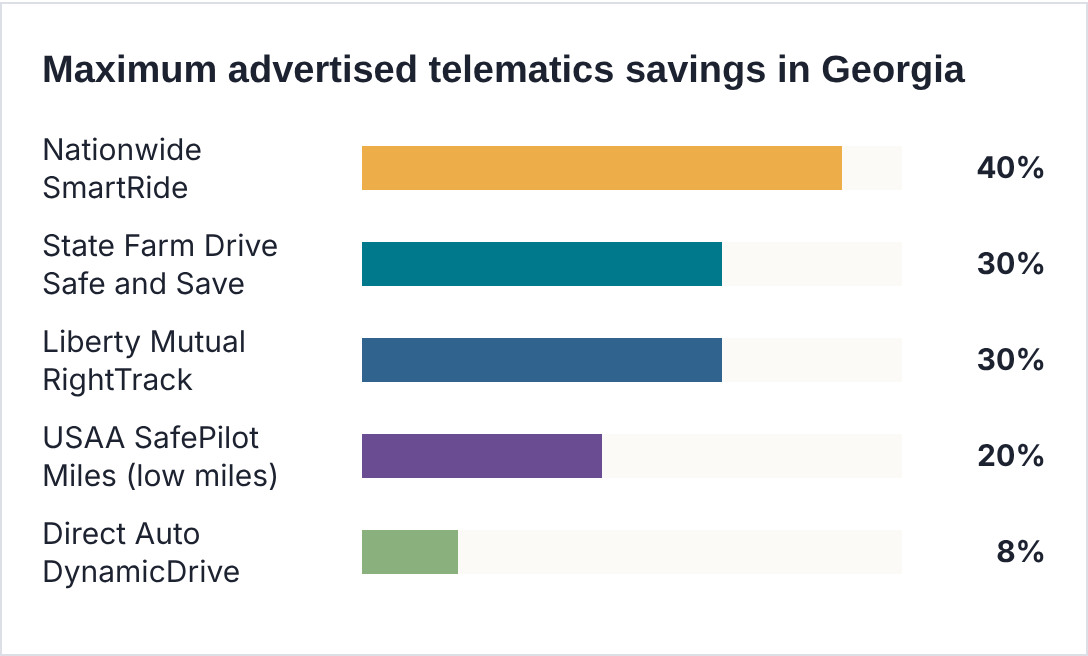
Telematics programs available to Georgia drivers
Program | Maximum savings | Can your rate go up? |
|---|---|---|
Nationwide SmartRide | Up to 40% | No; discount only |
State Farm Drive Safe and Save | Up to 30%, plus 10% to sign up | Yes, at renewal |
Progressive Snapshot | Average $328 at renewal; average $164 sign-up savings | Yes; about 2 in 10 drivers pay more |
Liberty Mutual RightTrack | Up to 30%, plus up to 15% to sign up | Yes |
GEICO DriveEasy | Not published | Rates vary with driving |
Direct Auto DynamicDrive | Up to 8% | Yes, in some states |
Company pages and a November 20, 2025, RightTrack review. Travelers IntelliDrive is not available in Georgia.
Behavior programs and pay-per-mile reward different things. Pay-per-mile rewards driving less; telematics rewards driving carefully. A careful driver with a long commute from Gwinnett or Cherokee County will usually do better with a behavior program, while a careful low-mileage driver may get the most from SmartMiles, which combines both.
Pay-per-mile vs. telematics vs. a low-mileage rating
Three tools can lower your bill when you drive less or drive well. The right one depends on both your mileage and your habits.
Three ways Georgia drivers can pay less
Feature | Pay-per-mile | Behavior telematics | Low-mileage rating |
|---|---|---|---|
Rewards | Driving less | Driving carefully | Driving less |
Bill changes monthly | Yes | No | No |
Can raise your rate | Sometimes, through safe-driving terms | Often | No |
Device or app | Often; Mile Auto uses a photo | Yes | No |
Best for | Under about 10,000 to 16,000 miles a year | Careful drivers with long commutes | Drivers slightly below average mileage |
Even if you choose a standard policy, report your mileage accurately. Most insurers ask how far you drive each year, and a lower honest estimate can reduce your premium without any device at all.
Some drivers combine approaches. A household might keep the daily commuter car on a standard policy with a safe-driving discount, and put a rarely used second car on pay-per-mile. Two insurers can mean two bills, but the savings on a car that sits most of the week can be worth it. Ask whether splitting policies costs you a multi-car discount, since that discount can offset part of the savings.
Who benefits from pay as you go car insurance in Georgia
Is pay-as-you-go right for you?
Driver | Good fit? | Best option |
|---|---|---|
Retirees and remote workers | Yes | Pay-per-mile |
MARTA riders in Atlanta | Yes | Pay-per-mile |
Students at UGA, Georgia Tech, or Georgia State | Often | Pay-per-mile, or stay on a parent's policy |
Second or weekend cars | Yes | Pay-per-mile |
Military families | Yes | USAA SafePilot Miles |
Drivers paycheck to paycheck | Maybe | Pay-per-day or monthly billing, without lapses |
Long-distance commuters | No | Behavior-based telematics |
Rideshare and delivery drivers | No | A policy with rideshare coverage |
Pros and cons of pay as you go car insurance in Georgia
Pros and cons
Pros | Cons |
|---|---|
Low-mileage drivers can save hundreds a year | Georgians average 17,508 miles, so many drivers will not save |
Several real options, including an Atlanta-based insurer | Pausing coverage can trigger Georgia lapse fees |
Safe-driving discounts can stack with mileage savings | Monthly bills change with your driving |
Daily caps limit the cost of road trips | Some programs add fees or penalties for missed reports |
Odometer-photo option avoids tracking devices | Mile Auto is not rated by AM Best |
Flexible payment for tight budgets | Not built for rideshare or delivery work |
Privacy: device, app, or photo?
Georgia gives you a choice. Mile Auto needs only a monthly odometer photo, with no location or behavior data. SmartMiles uses a plug-in device or your car's connected services, and its safe-driving discount means your habits can affect your price. USAA's program and the behavior-based programs use phone apps that track how you drive. Read each program's privacy policy before enrolling.
Credit still matters in Georgia
Georgia allows insurers to use credit-based insurance scores, with limits, so your base rate on any pay-per-mile policy may reflect your credit. Georgia law says credit cannot be the only reason to deny, cancel, or refuse to renew a policy; insurers must refresh credit information at least every 36 months, and you can ask to be re-rated once a year.
Road trips and driving out of state
Your Georgia policy covers you when you drive into Florida, Alabama, South Carolina, or Tennessee, but every mile still counts on a pay-per-mile plan. Nationwide's 250-mile daily cap helps on long days; a 500-mile drive to Orlando is billed as 250 miles. Other programs may count every mile, so check before a big trip.
Full coverage, loans, and leases
Pay-per-mile does not mean less coverage. You can buy Georgia's 25/50/25 minimum or full coverage with collision and comprehensive, and lenders and leasing companies usually require full coverage. Your base rate rises with more coverage, so compare pay-per-mile and standard quotes with identical limits and deductibles.
Rideshare and delivery driving
If you drive for a rideshare or delivery app, pay-per-mile is usually a poor fit. Your miles add up quickly, and personal policies often exclude or limit coverage while you are working. Ask about a rideshare endorsement on a standard policy instead.
How to switch without a lapse
- Buy the new policy and confirm its start date in writing.
- Set the start date to the day your old policy ends, or earlier.
- Put the new insurance card in your car.
- Cancel the old policy only after the new one is active.
- Check your registration status online through Georgia's DRIVES e-Services if you get a lapse notice.
How to get pay as you go car insurance in Georgia
- Check your real yearly mileage using your odometer and an old service receipt.
- Get a Mile Auto quote, and ask about monthly fees and the odometer photo deadline.
- Get a Nationwide SmartMiles quote online or through an agent.
- If you are in a military family, get a USAA SafePilot Miles quote.
- Get at least one standard quote, such as from Georgia Farm Bureau or Donegal, with the same limits.
- If you drive a lot, ask about telematics discounts from State Farm, Progressive, or Nationwide.
- Start the new policy the day the old one ends, so there is no lapse.
Questions to ask before you buy
- What are my base rate and per-mile rate, and are there monthly fees?
- What happens if I miss a mileage report?
- Is there a daily mileage cap for road trips?
- Can my rate go up because of how I drive?
- If I pause coverage, how is it reported to Georgia's insurance database?
PRO TIP #2
Plan for your heaviest month. If holiday travel to Florida or a summer trip to the mountains could double your miles, multiply those miles by your per-mile rate before you buy, and choose a program with a daily cap if you take long trips.
Common mistakes to avoid
The first mistake is assuming pay-per-mile is cheaper because it sounds cheaper. With Georgia's high average mileage, many drivers will pay more. The second is pausing a policy on a registered car, which can create a lapse, a $25 fee, and a suspended registration. The third is missing a mileage report; at least one program bills you at a high assumed mileage if you do. The fourth is relying on lists that still recommend Metromile, Lemonade, or Allstate Milewise for Georgia. Finally, compare quotes with identical limits, because a minimum-coverage pay-per-mile quote is not comparable with a full-coverage standard quote.
Pay-as-you-go glossary
Term | What it means |
|---|---|
Base rate | The fixed monthly charge, paid even if the car never moves |
Per-mile rate | The charge for each mile driven |
Daily cap | The most miles counted in one day, such as 250 |
Telematics | Technology that records how or how much you drive |
GEICS | Georgia's electronic system that matches cars with insurance |
Lapse | 10 or more days with no coverage on record for a registered car |
Break-even mileage | The yearly miles where pay-per-mile costs the same as a standard policy |
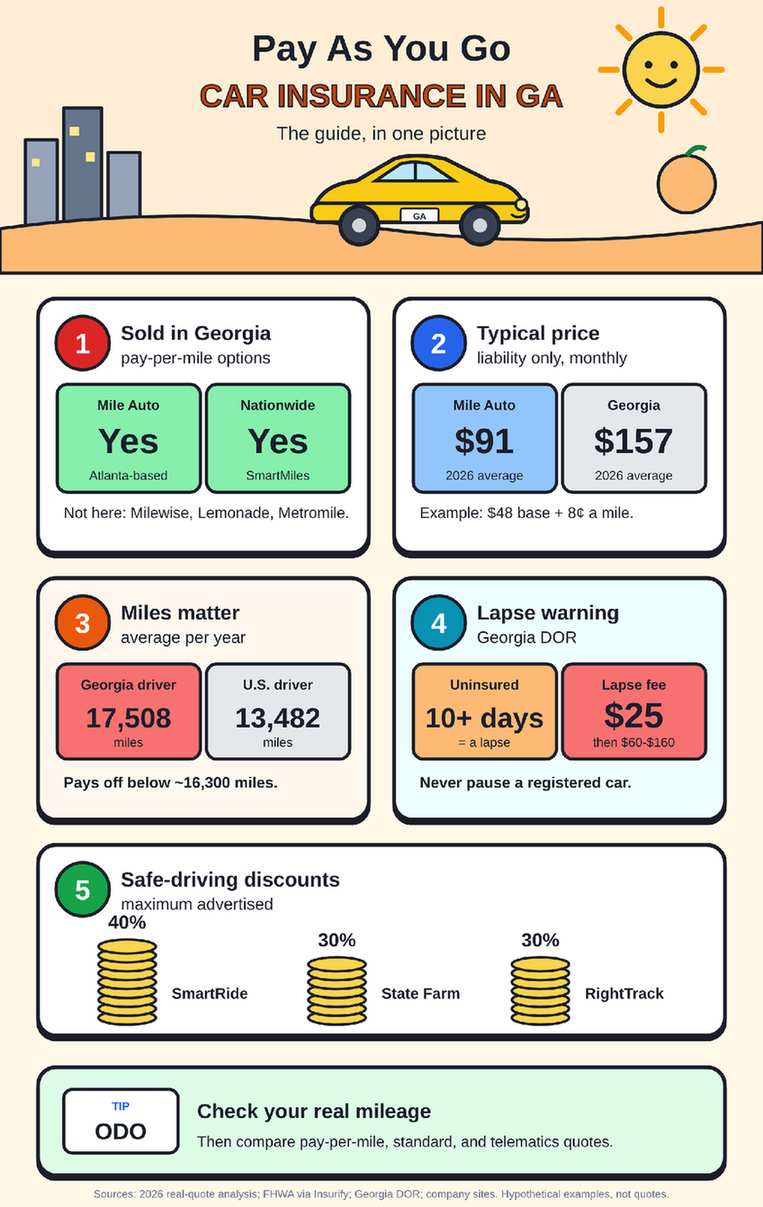
Pay as you go car insurance in Georgia at a glance
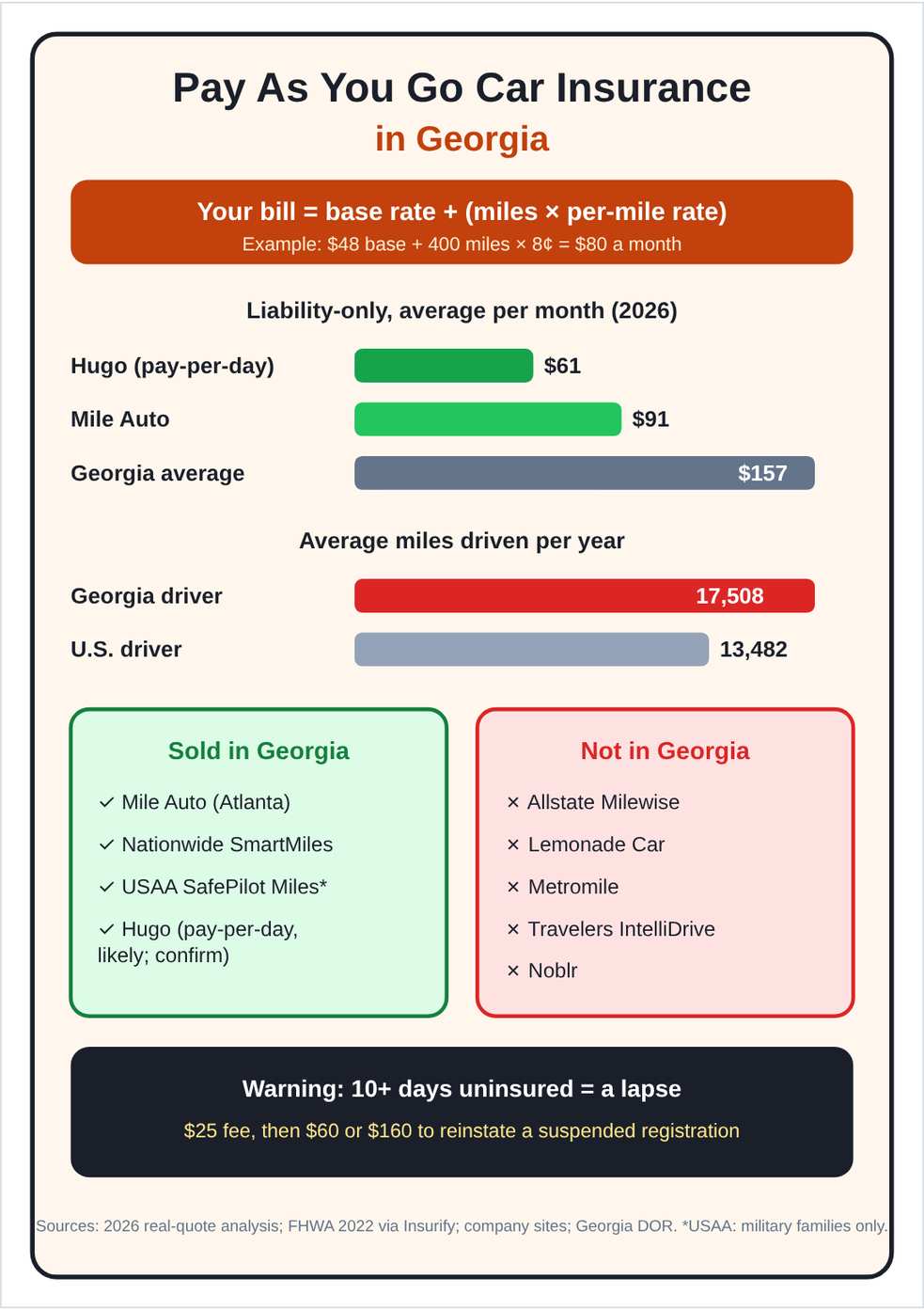
This illustrated summary pulls together the main points of this guide.
Frequently asked questions
Is pay-per-mile insurance available in Georgia?
Yes. Mile Auto, based in Atlanta, and Nationwide SmartMiles both sell pay-per-mile coverage in Georgia, and USAA SafePilot Miles is available to military families. Hugo's pay-by-the-day coverage is likely available too. Allstate Milewise, Lemonade Car, and Metromile are not sold in Georgia.
How much does pay-per-mile insurance cost in Georgia?
A 2026 rate study put Mile Auto at about $48 a month plus 8 cents a mile, with an average Georgia liability price of $91 a month against a $157 state average. Nationwide does not publish SmartMiles rates; national examples range from about 5 to 12 cents a mile.
How many miles make pay-per-mile worth it in Georgia?
It depends on your base rate. In our hypothetical example of $48 a month plus 8 cents a mile, pay-per-mile beat Georgia's average liability premium up to about 16,300 miles a year. Georgia drivers average 17,508 miles, so it mainly helps drivers well below average.
Can I turn my car insurance off in Georgia?
Only carefully. Georgia treats 10 or more days without coverage on a registered car as a lapse, with a $25 fee and possible registration suspension. If a car will sit unused, cancel its registration with the Department of Revenue before ending coverage, or keep continuous coverage.
Is Metromile available in Georgia?
No. Metromile never sold policies in Georgia, and Lemonade, which bought Metromile in 2022, does not sell car insurance in Georgia either. Georgia drivers who want pay-per-mile coverage should compare Mile Auto, Nationwide SmartMiles, and, for military families, USAA SafePilot Miles.
Does Hugo insurance work in Georgia?
Likely, but confirm. A 2026 rate study listed Georgia among Hugo's states and put its average Georgia liability price at $61 a month, but other sources list fewer states. Hugo charges a daily rate with no down payment. Ask how paused days are reported to Georgia's insurance database.
Are telematics discounts allowed in Georgia?
Yes. Georgia lets insurers price on driving behavior. Nationwide SmartRide advertises up to 40% off, State Farm Drive Safe and Save up to 30% plus 10% for signing up, and Liberty Mutual RightTrack up to 30%. Some programs can raise your rate for risky driving.
What is the minimum car insurance in Georgia?
Georgia requires liability coverage of $25,000 per person and $50,000 per accident for injuries, plus $25,000 for property damage. Insurers must offer uninsured motorist coverage, which you must reject in writing. Every pay-as-you-go policy must meet these limits while your car is registered.
The final word on pay as you go car insurance in Georgia
Georgia gives drivers more pay-as-you-go choices than many states, including an Atlanta-based pay-per-mile insurer, Nationwide SmartMiles, a military mileage program, and pay-by-the-day coverage. With Georgia's high average premiums, a low-mileage driver can save hundreds of dollars a year.
But Georgians drive far more than average, and the state's 10-day lapse rule punishes gaps in coverage. Check your real mileage, compare a pay-per-mile quote with a standard quote and a telematics discount, and never let a registered car go uninsured.
NEXT STEP
Check your yearly mileage, then get quotes from Mile Auto, Nationwide SmartMiles, and at least one standard Georgia insurer with the same limits. Compare the yearly totals at your real mileage before you switch.
Availability, rates, fees, discounts, and state rules change and vary by driver, vehicle, and ZIP code. The figures in this article are published averages, program terms, and hypothetical calculations, not quotes or offers. This article is for information only and is not legal or financial advice. The publisher is not an insurance company or a licensed insurance agency and is not affiliated with any company named here.
The bottom line on pay as you go car insurance in Georgia: it can be a smart, money-saving choice for low-mileage drivers, as long as you compare quotes carefully and keep your coverage continuous.
Sources
- Nationwide, SmartMiles, SmartMiles agent page, and SmartRide (accessed October 29, 2026).
- USAA, SafePilot Miles (accessed October 29, 2026).
- Insurify, Mile Auto (October 28, 2026); Insurify, Georgia car insurance (rates as of October 21, 2026); Insurify, average miles driven (March 18, 2026).
- Clark Howard via the Atlanta Journal-Constitution, Mile Auto firsthand review (March 2024).
- Hugo; Root, Root and Hugo partnership (June 2026).
- Lemonade, state availability; Insurify, Allstate Milewise; Travelers, IntelliDrive.
- State Farm, Drive Safe and Save; Progressive, Snapshot; Insurify, RightTrack; Direct Auto, DynamicDrive.
- MoneyGeek, Pay-per-mile car insurance (October 1, 2026); Insurify, SmartMiles (November 20, 2025).
- NerdWallet, Cheapest car insurance in Georgia (October 2026).
- Georgia Office of Insurance and Safety Fire Commissioner, auto insurance.
- Georgia Department of Revenue: insurance lapse fees, registration reinstatement, loss of insurance coverage, and insurer requirements.
- O.C.G.A. § 33-24-91, credit-based insurance scores.
- Insurance Information Institute, uninsured motorists.
- Urbanize Atlanta, INRIX 2025 traffic scorecard (December 2025).