
NJ SR-21 Form: Filing Requirements, Deadline & Insurance
Important filing distinction: On New Jersey’s official SR-1 (R5/21), the driver completes the SR-21 policy-information section. The separate “For use of insurance company only” section is not a driver filing prerequisite. For reportable crashes without an officer-filed report, the SR-1 generally must be submitted within 10 days.
After a crash in the Garden State, the NJ SR-21 form insurance filing requirements can confuse drivers, largely because the form is not what most websites say it is. The SR-21 is the insurance-information portion of New Jersey’s SR-1 self-reporting crash form. The information is subject to verification by the insurer; completing the form is not an independent guarantee that coverage existed. It is not a high-risk filing like an SR-22, and New Jersey does not require SR-22 certificates for its own drivers. A driver in a reportable crash generally has 10 days to submit the SR-1 if law enforcement has not filed the report. Incomplete insurance information can trigger a presumption of no liability coverage, so accuracy matters.
| Quick answer If you are in a New Jersey crash that causes injury, death, or more than $500 in damage to any one person’s property, and no police officer files a report, you must send an SR-1 to the New Jersey Department of Transportation within 10 days. Complete the SR-21 section using your insurance policy details and submit the SR-1 within 10 days. The driver signs the crash report; the separate insurance-company-only verification section is not a signature the driver must obtain before filing. Failure to submit a required crash report can lead to suspension of driving and registration privileges. |
Key takeaways
- The SR-21 is the insurance block of the SR-1 crash report, not a standalone certificate.
- It applies to crashes with injury, death, or over $500 in property damage to any one person.
- A reportable crash generally must be reported within 10 days if police do not file the report. The official form says the online acknowledgment is proof of submission.
- The official form warns that missing SR-21 insurance details can lead to an assumption that you lacked liability insurance; the state may verify coverage.
- NJM, Selective, and GEICO posted the lowest full coverage rates after an at-fault crash in the studies we reviewed.
How we researched this guide
We read the current SR-1 form published by the state, including its SR-21 section, and the state crash reporting guidance for drivers and police. We checked minimum coverage rules against the Department of Banking and Insurance bulletin on the 2026 limits. For prices, we compared four 2026 rate studies of New Jersey drivers, labeled Study A through Study D, and noted where their sample drivers differ. Where sources disagreed, we went with the state’s own documents.
What is the NJ SR-21 form?
The SR-21 is a short insurance verification block printed inside New Jersey’s SR-1, the Motor Vehicle Crash Report that drivers complete themselves. The SR-1 describes what happened. The SR-21 identifies the stated liability insurer and policy; the state can verify the supplied information. The form carries a blunt warning: if you fail to give full information in that section, it will be assumed that you did not have automobile liability insurance.
That makes the SR-21 a coverage check at a single point in time, the date of the crash. Unlike an SR-22, the SR-21 is not an ongoing multi-year proof-of-financial-responsibility filing. It relates to coverage at the time of a reported crash.
SR-21 vs. SR-22: clearing up the confusion
Unlike the SR-21, an SR-22 is a separate financial-responsibility certificate; see our SR-22 insurance explanation for additional context.
Many pages online describe the New Jersey SR-21 as the state’s version of an SR-22. That is not how the state’s own form works. Here is how the two documents compare.
| Feature | NJ SR-21 | SR-22 (other states) |
| What it is | Insurance section of the SR-1 crash report | Certificate of financial responsibility |
| Triggered by | A reportable crash | DUI, driving uninsured, or serious violations |
| Time covered | The date of the crash | Usually two to three years going forward |
| Who completes it | Driver supplies insurance details; the insurer-only verification block is separate | Your insurer files it with the state |
| State filing fee | None | Insurer fee in many states |
| Used by New Jersey drivers? | Yes | No, New Jersey does not require one |
If you moved to New Jersey while another state still requires you to carry an SR-22, that requirement comes from the other state. Contact that state’s motor vehicle agency before you let the filing lapse, since a New Jersey policy alone may not satisfy it.
When the SR-21 filing requirements apply
| Situation | Do you file an SR-1 with SR-21? |
| Crash with any injury or death, no police report | Yes, within 10 days |
| Over $500 in damage to one person’s property, no police report | Yes, within 10 days |
| Police investigated and filed a crash report | Not required by the state |
| Damage clearly under $500 and no injuries | No state report is required |
| You need to correct a self-reported crash | File the SR-1S change form |
Be careful with the $500 line. A cracked bumper cover and a broken sensor can pass that figure quickly at today’s repair prices, so assume a crash is reportable unless the damage is truly cosmetic.
How to file an NJ SR-21, step by step
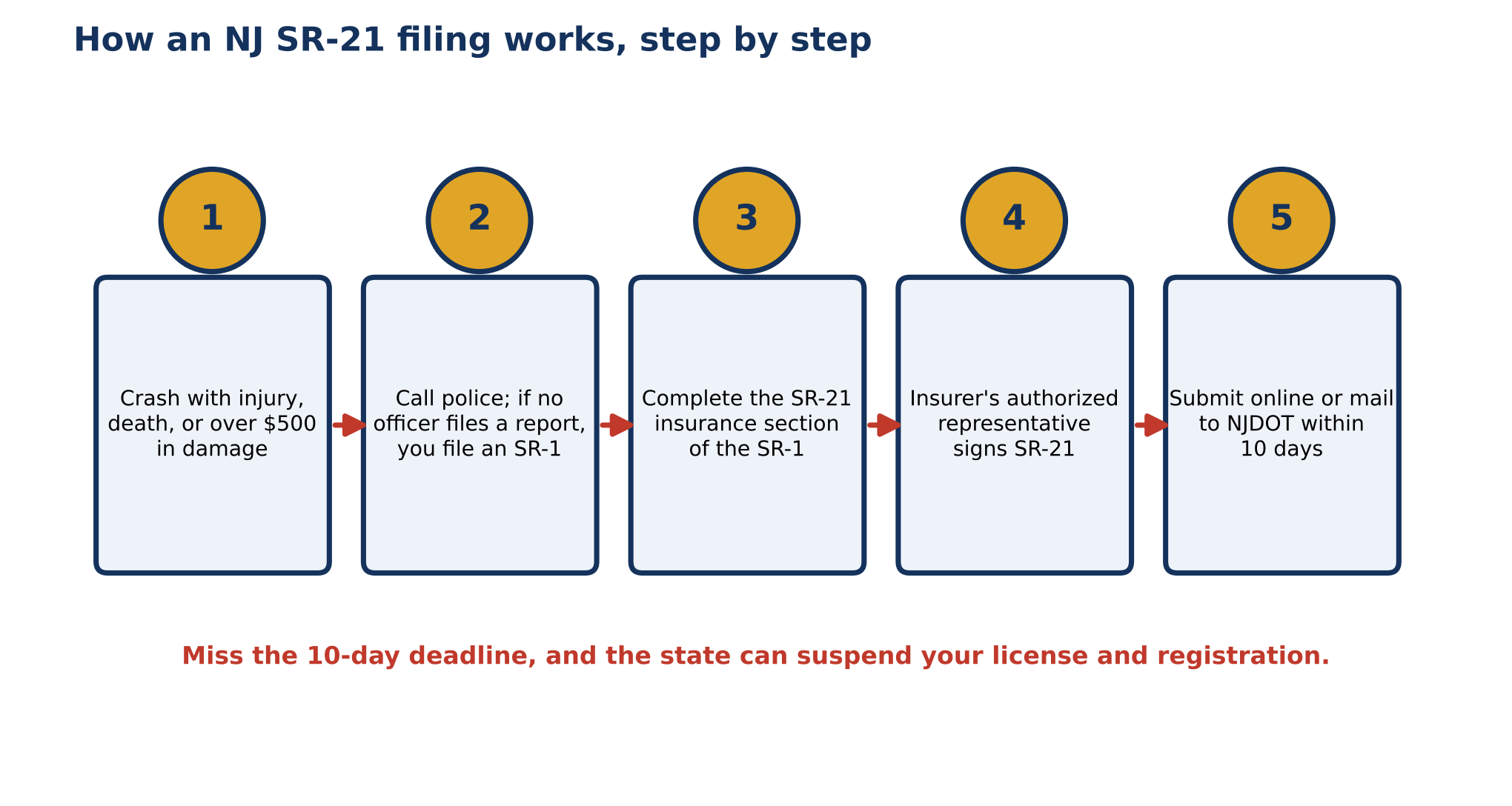
Figure 1. The SR-21 filing process from crash to submission.
- Call the police right after the crash, as state law expects for reportable accidents.
- If no officer files a report, download the SR-1 or open the state’s online crash form.
- Fill in the crash details, the vehicles, and the people involved.
- Complete the SR-21 insurance section with your policy information.
- Enter accurate insurance information from your policy. The insurer-only signature block is separate and does not need to be completed by you before filing.
- Date and sign every page at the bottom, as the instructions require.
- Use the NJDOT electronic self-reporting service if it is available to you, or send the paper form to the address on the official SR-1. Keep proof of submission.
- Keep a copy and your receipt, and send a copy to your insurer with your claim.
What the SR-21 section asks for
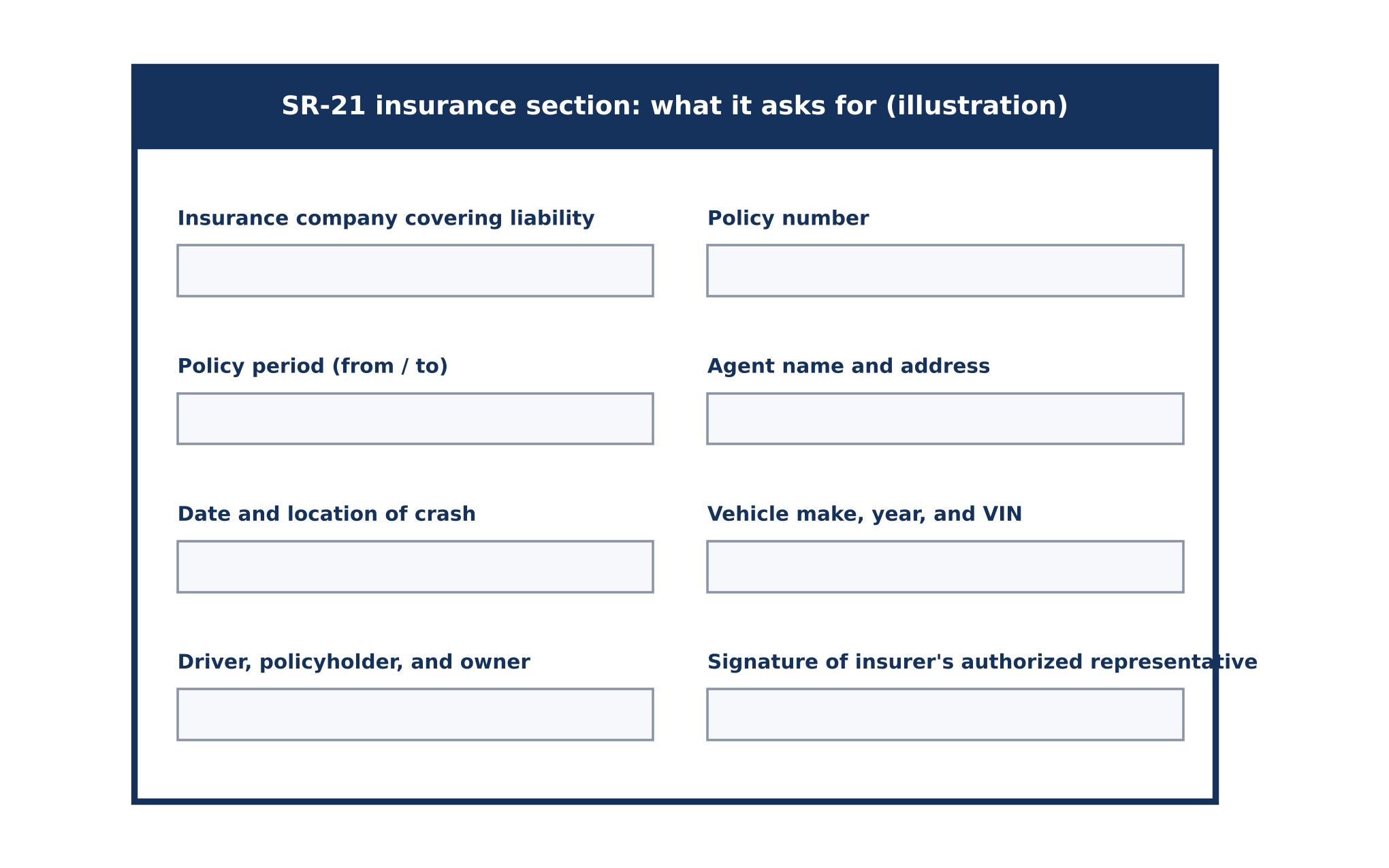
Figure 2. The fields in the SR-21 insurance section (illustration, not the official form).
The SR-21 asks for the liability insurer (not just the agent), policy number, and policy period. It also asks for the agent who sold the policy, the date and location of the crash, the vehicle’s make, year, and VIN, and the names and addresses of the driver, policyholder, and owner. Pull these from your insurance ID card and declarations page before you call your insurer, and you can check the details before submission.
Where to send it: online or by mail
The SR-1 instructions say the electronic filing system can return an acknowledgment within minutes and that the online receipt is proof of submission. Availability and actual submission confirmation should be checked on the official NJDOT site. If you mail the paper SR-1, send it to the New Jersey Department of Transportation, Bureau of Transportation Data and Safety, 1035 Parkway Avenue, PO Box 600, Trenton, NJ 08625-0600. Mail early, because the 10-day clock does not pause for postal delays.
What happens if you fail to report or provide insurance information
The official SR-1 warns that failing to submit a required accident report can result in suspension of driving and registration privileges. Separately, incomplete SR-21 information can cause the state to presume liability coverage was absent until the insurance information is verified. The form also tells drivers to notify their insurers directly. Restoring a license after a suspension generally carries a $100 restoration fee, on top of any other fines.
Who has to follow the SR-21 rules
The reporting duty falls on the driver of a vehicle involved in a reportable crash in New Jersey. That includes residents, commuters from New York and Pennsylvania, and visitors in rental cars, because the rule turns on where the crash happened, not where you live. The SR-21 section also asks for the policyholder and the owner, so if you were driving a friend’s or a family member’s car, use the actual policy covering the vehicle and confirm coverage details with the owner or insurer before filing; the driver fills in the SR-21 fields.
Rental drivers should call the rental company and the card issuer or personal insurer that covers the rental. Ask the rental company and applicable insurers which policy covers the vehicle and record only verified details on the SR-21.
A worked example: one fender bender, start to finish
Here is a hypothetical case to show the timeline. A driver backs into another car in a Morristown lot on a Monday. Nobody is hurt, but the body shop estimate for the other car comes to $1,800. Police are called but do not file a crash report.
| Day | What the driver does |
| Day 1 | Swaps insurance details, photographs both cars, and calls the police and the insurer |
| Day 2 | Gets a repair estimate showing more than $500 in damage, but the reporting obligation is based on the crash itself, not when an estimate arrives |
| Day 3 | Checks policy details with the insurer; no insurer signature is required from the driver before submitting |
| Day 4 | Submits the SR-1 online and saves the receipt |
| Day 5 | Sends the receipt to the insurer with the claim |
Now the cost side. If this driver was paying GEICO’s Study A clean rate of $159 a month and the crash is ruled at fault, the same insurer’s after-crash rate of $218 adds $708 a year. A separate NJM sample price of $200 a month appears in Study A, but switching savings cannot be guaranteed: the figures are illustrative and actual eligibility and quotes may differ.
The coverage your SR-21 must show
For an entirely different New Jersey insurance product, see our Dollar-a-Day SAIP guide; SAIP is not a substitute for the Standard Policy limits shown here.
List the policy actually in effect on the crash date. Requirements depend on the policy type and effective or renewal date; an SR-21 filing does not change the coverage that existed at the time. Since January 1, 2026, a Standard Policy must carry at least $35,000 per person and $70,000 per accident in bodily injury liability, plus $25,000 in property damage and $15,000 in personal injury protection.
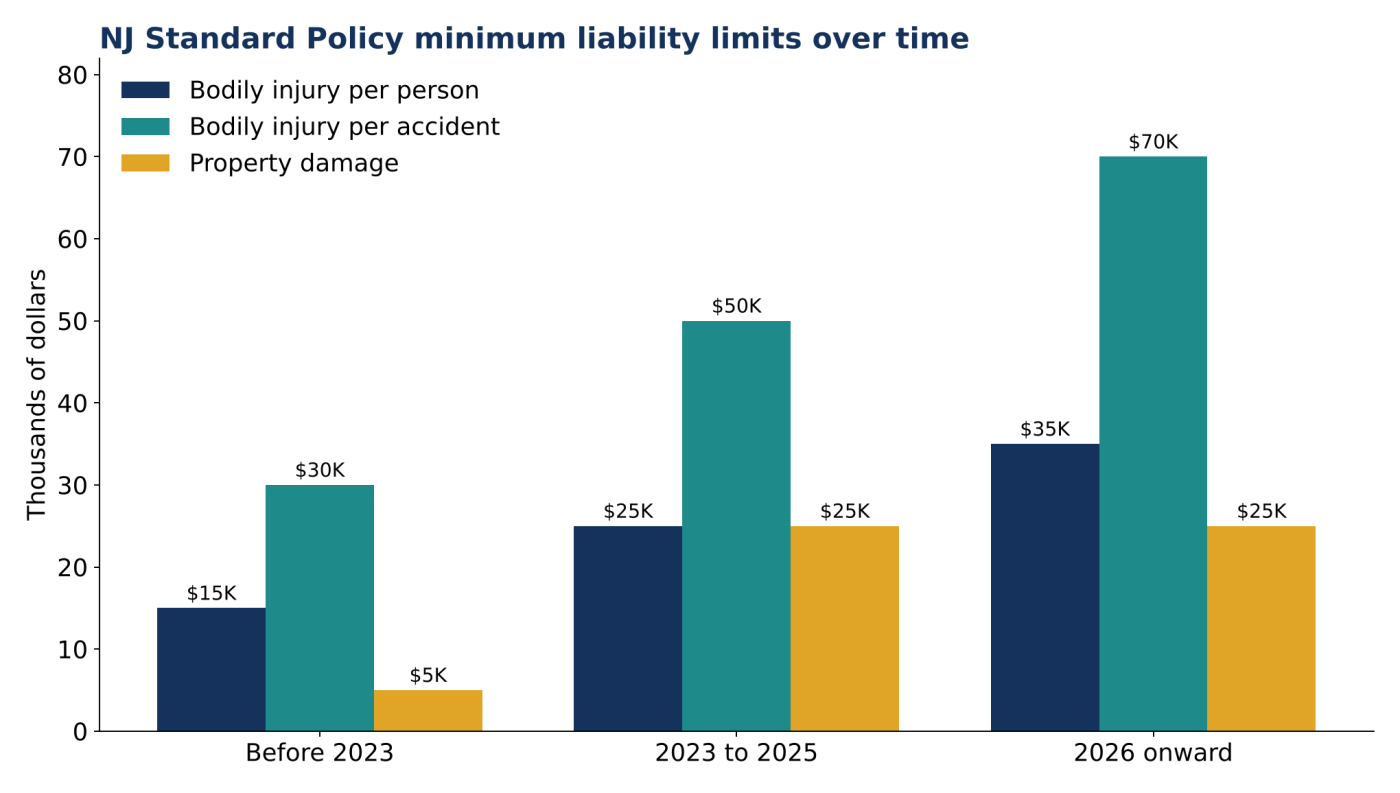
Chart 2. Standard Policy minimum liability limits, before 2023 through 2026.
| Coverage | Standard Policy | Basic Policy |
| Bodily injury liability | $35,000 / $70,000 | Optional $10,000 per accident |
| Property damage liability | $25,000 | $5,000 |
| Personal injury protection | $15,000 minimum, up to $250,000 | $15,000 |
| Uninsured / underinsured motorist | Included | Not available |
A Basic Policy is legal, but it offers thin protection after a serious crash and no uninsured motorist coverage. If your SR-21 lists a Basic Policy, expect the other driver’s claim to test those low limits quickly.
How a reportable crash changes your premium
An overview of insurance company comparison factors can help you look beyond the lowest advertised premium.
Filing the SR-21 itself does not raise your rate. The crash behind it might. New Jersey full coverage rates rise by about 29% on average after a first speeding ticket and about 73% after a first at-fault accident. After a DUI, the average full coverage rate climbs to $448 a month, roughly 80% above a clean record.
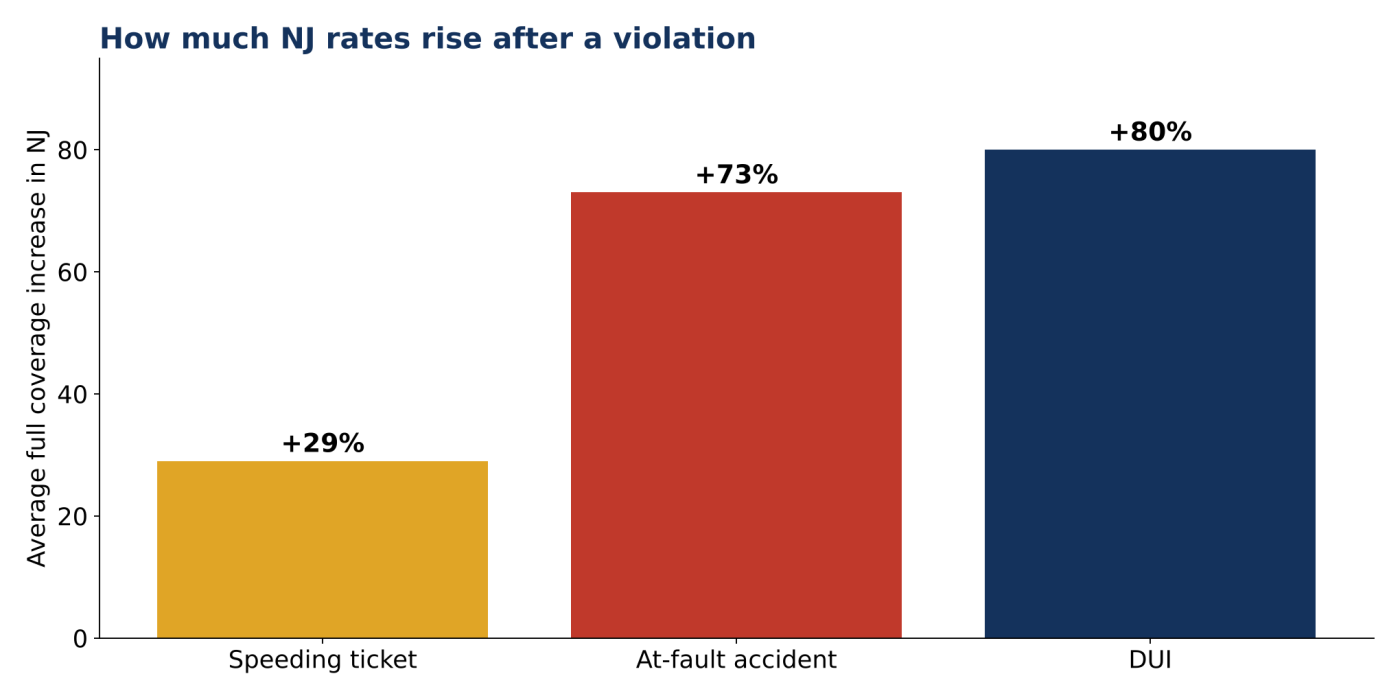
Chart 3. Average New Jersey full coverage increase by violation type.
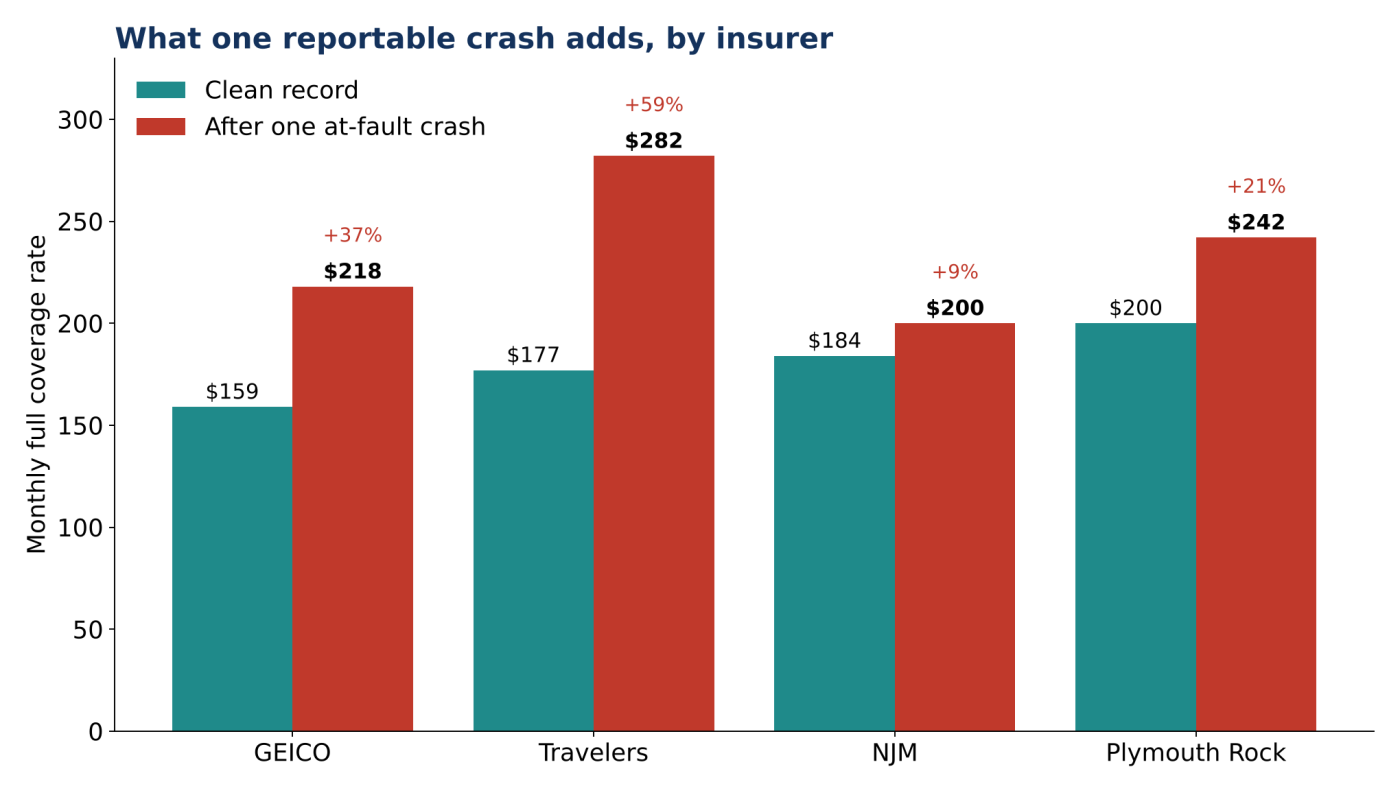
Chart 4. Monthly full coverage rate before and after one at-fault crash, Study A.
The spread between insurers is what matters most. In Study A, NJM raised its full coverage rate by only about 9% after an at-fault crash, while Travelers raised its rate by about 59%. A driver who stays put without comparing quotes can pay the difference for three years or more.
DUI cases and the New Jersey surcharge
A DUI does not create an SR-21 requirement by itself, but drivers often search for both at once. New Jersey adds a state surcharge of at least $1,000 a year for three years after a DWI conviction, on top of whatever your insurer charges. Getting the license back after a DUI suspension also requires a $100 restoration fee plus a $150 DUI-related fee, for at least $250.
On the insurance side, GEICO posted the lowest full coverage rate after a DUI in Study A at $221 a month, followed by Plymouth Rock at $232 and NJM at $242. For minimum coverage after a DUI, Plymouth Rock and Progressive tied at $73 a month.
Your SR-21 document checklist
| Document | Where to find it | Why you need it |
| Insurance ID card | Glove box or insurer app | Company name and policy number |
| Declarations page | Insurer account or email | Policy period and coverage limits |
| Vehicle registration | Glove box | Make, year, and VIN |
| Driver’s license | Your wallet | Driver name and address |
| Crash photos and notes | Your phone | Date, time, and location |
| Repair estimate | Body shop | Shows whether damage tops $500 |
Post-accident car insurance estimates in New Jersey
Because an SR-21 follows a reportable crash, a useful next step is comparing post-accident insurance quotes. These are illustrative monthly rate estimates from four 2026 studies using different drivers, vehicles and coverage. They must not be interpreted as one comparable statewide top-10 ranking.
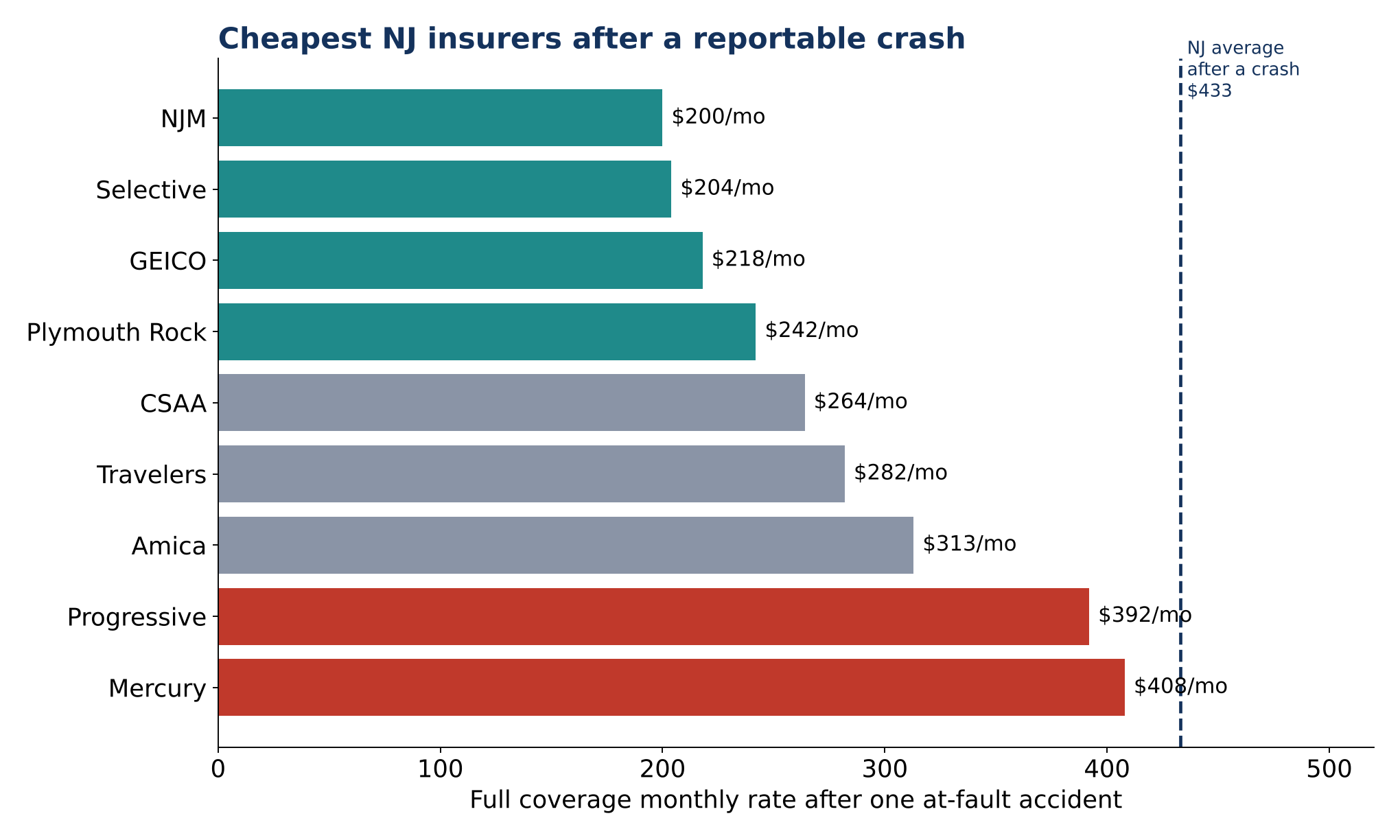
Chart 5. Cheapest full coverage after one at-fault accident in New Jersey.
| Insurer | Full coverage after a crash | Minimum coverage after a crash | Source |
| NJM | $200/mo | $78/mo | Study A |
| Selective | $204/mo | Not published | Study C |
| GEICO | $218/mo | $78/mo | Study A |
| Plymouth Rock | $242/mo | $75/mo | Study A |
| CSAA | $264/mo | Not published | Study D |
| Travelers | $282/mo | Not published | Study A |
| Amica | $313/mo | Not published | Study A |
| Progressive | $392/mo | $107/mo | Studies B and A |
| Mercury | $408/mo | Not published | Study D |
Study A used a 35-year-old driver with good credit, a 2023 Toyota Camry LE, and a $10,000 at-fault crash. The other studies used different sample drivers and coverage profiles; cross-study values cannot be ranked as if measured under identical conditions. Selective’s figure is its $123 clean rate plus the $81 increase Study C reported after an at-fault accident.
Cheapest New Jersey insurer by driver profile
| Profile | Cheapest insurer | Monthly full coverage |
| Clean record | GEICO | $159 |
| One at-fault crash | NJM | $200 |
| One speeding ticket | GEICO | $159 |
| DUI | GEICO | $221 |
| Poor credit | NJM | $313 |
All figures in this table come from Study A, which puts the average New Jersey driver at about $310 a month.
10 tips to save more after an SR-21 filing
Before increasing the amount you pay after a collision, review how an insurance deductible works.
- Compare quotes at renewal or sooner if your circumstances require it; keep limits, deductibles and driver profiles equivalent.
- Consider NJM, GEICO and Plymouth Rock alongside other available insurers; results vary by the underlying study and individual profile.
- Ask about accident forgiveness before you switch, since some insurers waive the first at-fault crash.
- Raise the collision deductible to $1,000 if you have the cash on hand to cover it.
- Drop collision on an older car once its value falls near your yearly collision premium.
- Keep PIP at a level that fits your health coverage rather than cutting it blindly.
- Take a state-approved defensive driving course and ask whether your insurer gives a credit for it.
- Bundle your auto policy with homeowners or renters coverage for a multi-policy discount.
- Enroll in a telematics program if you drive gently and mostly outside rush hour.
- Pay in full and set up autopay, which many insurers reward with a small discount.
Pro Tips
Pro Tip: Call your insurer promptly to verify policy information, but do not delay filing while waiting for an insurer signature not required on the driver-completed SR-21.
Pro Tip: Where the official online reporting service is available, save the acknowledgment as evidence of submission.
Pro Tip: Photograph every page before you mail a paper SR-1, and send it with tracking.
Pro Tip: Check the policy period against the crash date and verify any coverage dispute directly with the insurer.
Pro Tip: Request your driving record a few weeks later to confirm no suspension was posted by mistake.
Questions to ask your insurer when you call
If you are concerned about credit-based rating, our guide to car insurance without credit checks discusses relevant limitations.
A short call can prevent most SR-21 problems. Before you hang up, get clear answers to these questions.
- Can you verify the insurer name, policy number and effective dates I should enter in the SR-21?
- Was my coverage active for this vehicle and driver on the crash date?
- Does my policy period on the form match the crash date exactly?
- Will this crash be rated as at-fault, and when would that show up on my renewal?
- Does my policy include accident forgiveness, and does it apply here?
- Which coverage pays for the other driver’s car, and what is my deductible for my own repairs?
Write down the name of the person you spoke with and the date. Do not miss the reporting deadline while awaiting an insurer response. If coverage information is unresolved, contact NJDOT or the MVC for filing guidance and document your attempts to verify it.
Common SR-21 mistakes to avoid
For maintaining future coverage, see how insurance payments from a checking account work; payment options do not change the SR-1 reporting deadline.
- Assuming a police response means you are covered when no officer actually filed a report.
- Leaving the policy number or VIN blank, which the state can treat as no insurance.
- Mistaking the separate insurer-only verification section for a driver signature requirement.
- Guessing that damage is under $500 without a repair estimate.
- Forgetting to date and sign each page at the bottom.
Frequently asked questions about NJ SR-21 form insurance filing requirements
Is the NJ SR-21 the same as an SR-22?
No. The SR-21 is the insurance section of the SR-1 crash report, while an SR-22 is a multi-year certificate that New Jersey does not require.
How long do I have to file?
Ten days from the date of the crash.
Does it cost anything to file?
The state charges no filing fee for the SR-1 or its SR-21 section.
Can I file the SR-21 online?
Yes. The state’s electronic crash form returns a receipt within minutes that insurers accept as proof.
Who signs the SR-21?
The driver completes the SR-21 information. A separate block reserved for insurers has an authorized-representative signature line; the driver should not complete that block.
Do I need an SR-21 if the police came?
If an officer files a crash report, the state does not require you to file your own SR-1.
What if I was uninsured at the time?
The state will treat you as uninsured, which can mean suspension, fines, and a restoration fee.
Will filing an SR-21 raise my rate?
The filing does not, but an at-fault crash raises New Jersey rates by about 73% on average.
Which insurer is cheapest after a crash in New Jersey?
NJM was cheapest in Study A at $200 a month for full coverage after one at-fault crash.
Do I still need to call my own insurer?
Yes. Filing with the state does not replace reporting the crash to your insurance company.
The final word on NJ SR-21 form insurance filing requirements
Treat the SR-1 and its SR-21 information as a time-sensitive crash-reporting task. The driver signs the report; insurer-only verification is separate. Keep your declarations page handy, file online when you can, and save the receipt. Then turn to the bigger money question, which is what the crash does to your premium. Comparing NJM, Selective, GEICO, and Plymouth Rock against your renewal offer can save several hundred dollars a year while the accident sits on your record.
If anything about your situation is unusual, such as a crash in a borrowed car, an out-of-state SR-22 still in force, or a suspension notice you did not expect, call the Motor Vehicle Commission before the deadline passes. Check the latest agency contact details and requirements, while a suspension can carry restoration fees and can leave you unable to drive legally until the state sends a notice that your driving privileges have been restored.
Sources
Primary official form: New Jersey MVC SR-1 (R5/21), including SR-21. Coverage minimums: NJDOBI Bulletin 25-06.
New Jersey Motor Vehicle Commission, SR-1 Motor Vehicle Crash Report with SR-21 section (R4/11): https://www.state.nj.us/transportation/refdata/accident/pdf/SR-1.pdf
New Jersey Department of Transportation, Self-Reporting Crash Form: https://www.nj.gov/transportation/refdata/accident/selfreporting.shtm
New Jersey Department of Transportation, NJTR-1 Police Guide: https://www.nj.gov/transportation/refdata/accident/pdf/NJTR1-Police_Guide.pdf
New Jersey Department of Banking and Insurance, Bulletin 25-06 on new auto minimum limits: https://www.nj.gov/dobi/bulletins/blt25_06.pdf
New Jersey Motor Vehicle Commission, Insurance Requirements: https://nj.gov/mvc/vehicles/insurancerequirements.htm
Legal Services of New Jersey, Eight types of license suspensions: https://www.lsnjlaw.org/Criminal-Charges-and-Convictions/Motor-Vehicle-Laws/Pages/Eight-Types-License-Suspensions.aspx
NerdWallet (Study A), Cheap car insurance in New Jersey, November 2026: https://www.nerdwallet.com/insurance/auto/cheap-car-insurance-new-jersey
ValuePenguin (Study B), Cheapest car insurance quotes in New Jersey (2026): https://www.valuepenguin.com/auto-insurance-rate-increases-new-jersey
MoneyGeek (Study C), Cheapest car insurance in New Jersey (2026): https://www.moneygeek.com/insurance/auto/cheapest-car-insurance-new-jersey/
FinanceBuzz (Study D), Cheapest car insurance in New Jersey, June 2026: https://financebuzz.com/cheap-car-insurance-nj
Insurify, SR-22 insurance in New Jersey: https://insurify.com/car-insurance/new-jersey/sr-22-car-insurance/
Insurify, New Jersey car insurance laws (2026): https://insurify.com/car-insurance/new-jersey/car-insurance-laws/
Scura, Wigfield, Heyer, Stevens & Cammarota, New Jersey auto insurance minimums 2026: https://www.scura.com/blog/new-jersey-auto-insurance-minimums-increase-2026/
Bankrate, Driving without insurance in New Jersey (via AOL): https://aol.com/finance/driving-without-insurance-jersey-170915160.html
Disclaimer
This guide explains New Jersey crash reporting and insurance rules in plain language and summarizes published rate studies. It is general information, not legal advice, and it is not affiliated with the State of New Jersey or any insurer named. Forms and rules can change, so confirm current requirements with the New Jersey Motor Vehicle Commission, the Department of Transportation, or a licensed attorney or agent before you act.